
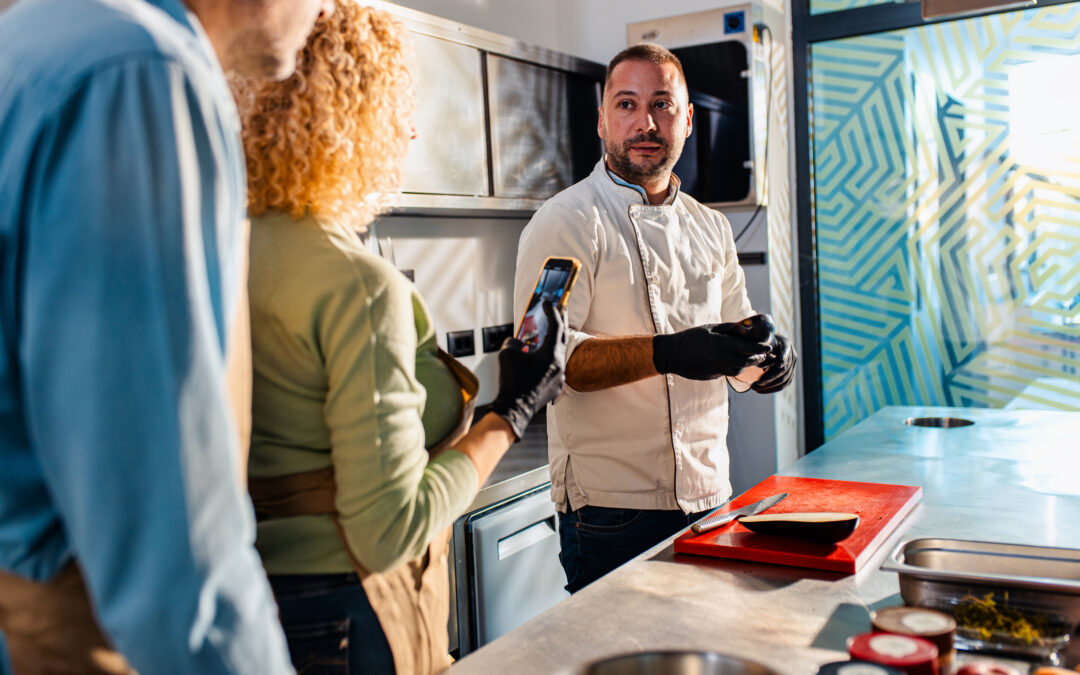
One of the most common questions we receive from students is: “Do I really need to record my food safety assessment videos in a kitchen or food preparation area?” The short answer is yes — not to make the course harder, but to ensure your training meets national food safety assessment standards. Food safety is a practical, hands-on skill. Those skills must be demonstrated in a realistic environment, just as they would be in a face-to-face course. If you’ve chosen the convenience of completing your food safety course online, this article explains why your assessment location matters, what counts as an appropriate food preparation area, and how this requirement protects the validity of your nationally recognised certificate. ❓ FAQ: What counts as a suitable food preparation area?
Why the Assessment Environment Matters in Food Safety Training
Food safety training isn’t just about what you know — it’s about what you can do. And what you can do depends heavily on the environment you are working in. Correct handwashing, contamination control, hygienic food preparation, cleaning, sanitising, and safe equipment use all require context. That context cannot be demonstrated in a lounge room, bedroom, or office. Food handling is environmental. The assessment must reflect that environment. If you’re not familiar with what performance evidence is or why it’s important, read our full guide: 🔗 What Is Performance Evidence in Food Safety Training (And Why It Protects Your Certificate)
National Competency Standards Require Realistic Demonstration
The nationally recognised units of competency for food safety — such as SITXFSA005 – Use Hygienic Practices for Food Safety and SITXFSA006 – Participate in Safe Food Handling Practices or SIRRFSA001 – Handle Food Safety in a Retail Environment — clearly state that students must demonstrate tasks:
- In real food preparation situations, or
- In simulated environments that accurately reflect food service conditions
This means the assessment must show that you can apply safe food handling principles in a realistic food preparation area where food is received, prepared, stored, and served. This is a core requirement of Australia’s Vocational Education and Training (VET) system. To understand how these requirements apply equally to online and face-to-face delivery, read: 🔗 Why Real-World Assessment Matters in Food Safety Training (Before You Choose an Online Course)
What the Assessor Is Looking For in Your Assessment Environment
When an assessor reviews your food safety assessment videos, they are not just assessing you — they are also evaluating how effectively you manage the food preparation environment. This includes:
- Cleanliness and hygiene – The area must be clean, organised, and suitable for preparing food.
- Handwashing facilities – Correct food-safe handwashing at an appropriate sink must be visible.
- Surface and bench management – Including contamination control and separation of raw and ready-to-eat foods.
- Equipment and tool use – Thermometers, chopping boards, cleaning agents, and PPE must be used correctly.
- Safe workflow and movement – Demonstrating food safety principles in action, not just theory.
These observations simply cannot be made outside a suitable food preparation environment.
Why Completing Your Assessment Outside a Kitchen Puts Your Certificate at Risk
If your food safety assessments are not completed in a proper food preparation area, your evidence may be considered invalid under:
- ASQA’s Rules of Evidence
- The national units of competency
- Food safety regulatory expectations
This can lead to:
- Employers rejecting your certificate during onboarding or compliance checks
- Council audit issues for your workplace
- ASQA regulatory action against the RTO, including cancelled qualifications
- You needing to redo your training with a compliant RTO
Your certificate should protect you — not put you at risk. If you’re comparing online training providers, read this first: 🔗 Thinking of Choosing an RTO That Doesn’t Require Video Evidence? Here’s What You Need to Know ❓ FAQ: Can I complete my assessment in a home kitchen?
Online Learning Does Not Reduce Assessment Requirements
A common misconception is that online courses require less assessment. This is incorrect. Food safety assessment requirements are identical regardless of delivery method. Face-to-face: The assessor observes your skills in person. Online: The assessor observes your skills through recorded video submissions. The expectations are the same — only the delivery method changes.
What Counts as a Suitable Food Preparation Area?
You must complete your assessment in an operational food preparation environment. Suitable examples include:
- Cafés, restaurants, hotels, and commercial kitchens
- Food-based charities with shared kitchen facilities
- Institutional kitchens such as school canteens, childcare, and aged care facilities
- Simulated training kitchens at TAFE or community training centres
Environments that are not suitable include:
- Home kitchens
- Offices
- Outdoor or backyard settings
- Any space without proper food preparation and handwashing facilities
If the environment cannot support correct hygiene, safe food handling, contamination control, and equipment use, it cannot be used for assessment.
AIA’s Approach: Convenience Without Compromising Compliance
At AIA, we require video evidence because:
- We follow national food safety competency requirements
- We protect the integrity and acceptance of your qualification
- We ensure certificates stand up under workplace, council, or regulatory audit
- We want students to be job-ready with real, demonstrated skills
We are the next best thing to face-to-face food safety training — offering flexibility without compromising assessment quality or compliance.
Final Thoughts: Your Skills Matter — And Your Assessment Environment Matters Too
Recording your assessment videos in a suitable food preparation area allows you to demonstrate:
- Correct hygiene and handwashing practices
- Safe food handling and preparation
- Contamination control
- Cleaning and sanitising procedures
- Correct workflow and equipment use
This protects the validity of your food safety certificate and ensures your training meets national standards.
For a deeper comparison of assessment methods, read:
🔗 Online vs Face-to-Face Food Safety Training: What’s the Actual Difference in Assessment?
Training delivered by Australian Institute of Accreditation (RTO 45009). Upon successful completion, learners receive a Nationally Recognised Statement of Attainment for the units listed above. For details about fees, assessment requirements, and learner support, visit our website https://b-t.website/